
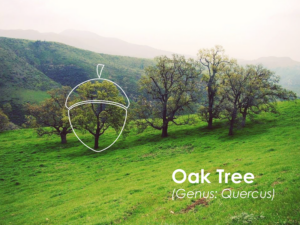
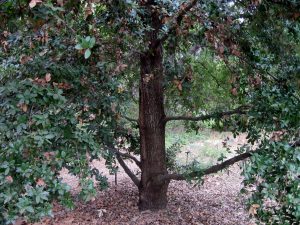
 The Oak Tree (Quercus) is an iconic tree of the LA County landscape. The Oak tree is a keystone species in a complex ecosystem, providing habitat for 5,000 insects, 80 species of reptiles and amphibians, 100 species of birds, and over 60 mammals! Oak woodlands are protected state-wide and LA County developed one of the first Oak Tree Ordinances in the state in 1982. Oak trees can be found in every Significant Ecological Areas (SEA) in LA County!
Oak trees are more resistant to fire than other trees. They can recover and regenerate through re-sprouting from fire-damaged trunks or acorns. You can usually see signs of regeneration within 3 months. However, the more frequent or intense the fire, the less chance of recovery. This is because recovery takes a lot of energy from the tree. Oak trees already at a recovery stage may not be strong enough to withstand quick successions of wildfires.
Oak trees are also affected by non-native pests like the Invasive Shot Hole Borers and Gold Spotted Oak Borer. Other threats to oak trees include, development, drought, disease, and increased fire frequencies.
There are 17 native species of oak trees in LA County. The most common species people recognize are the Coast Live Oak and the Valley Oak.
- Coast Live Oak (Quercus agrifolia)
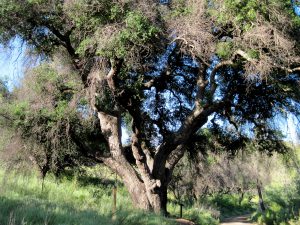
- Valley Oak (Quercus lobata)
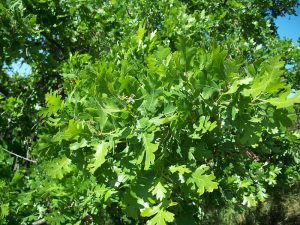
- Blue Oak (Quercus douglasii)
- Engelmann’s Oak (Quercus engelmannii)
- Canyon Live Oak (Quercus chrysolepis)
- Black Oak (Quercus kelloggii)
- Hybrid of Black Oak & Interior Live Oak (Quercus x morehus)
- California Scrub Oak (Quercus berberidifolia)
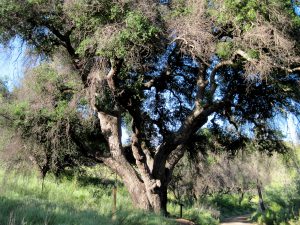
- Interior Live Oak (Quercus wislizenii var. frutescens)
- Quercus agrifolia x Quercus wislizenii
- San Gabriel Mountains Leather Oak (Quercus durata var. gabrielensis)
- Oregon Oak (Quercus garryana var. breweri)
- Tucker’s Oak (Quercus john-tuckeri)
- Hybrid of Blue Oak & Tucker’s Oak (Quercus x alvordiana)
- Island Oak (Quercus tomentella)
- Channel Islands Scrub Oak (Quercus pacifica)
- MacDonald Oak (Quercus x macdonaldii)
References: Jennifer Mongolo, LA County Oak Woodland Conservation Management Plan